
Views: 0 Author: Site Editor Publish Time: 2025-12-16 Origin: Site


Forklifts are a critical part of many industries, from warehouses to construction sites. But have you ever wondered how much a forklift weighs? Understanding forklift weight is essential for safe operation and efficient transportation.
In this article, we'll explore how forklift weight impacts operation, safety, and capacity, and guide you on choosing the right forklift for your needs.
Standard electric forklifts typically weigh between 8,000 and 9,000 lbs. These machines are designed for light to medium-duty tasks and are commonly used in warehouses, retail settings, and manufacturing environments. Electric forklifts are powered by large batteries, which contribute significantly to their weight. The battery’s weight allows the forklift to carry substantial loads and run for extended periods. However, it also affects the forklift’s maneuverability in tight spaces, making it better suited for indoor environments where space is often limited.
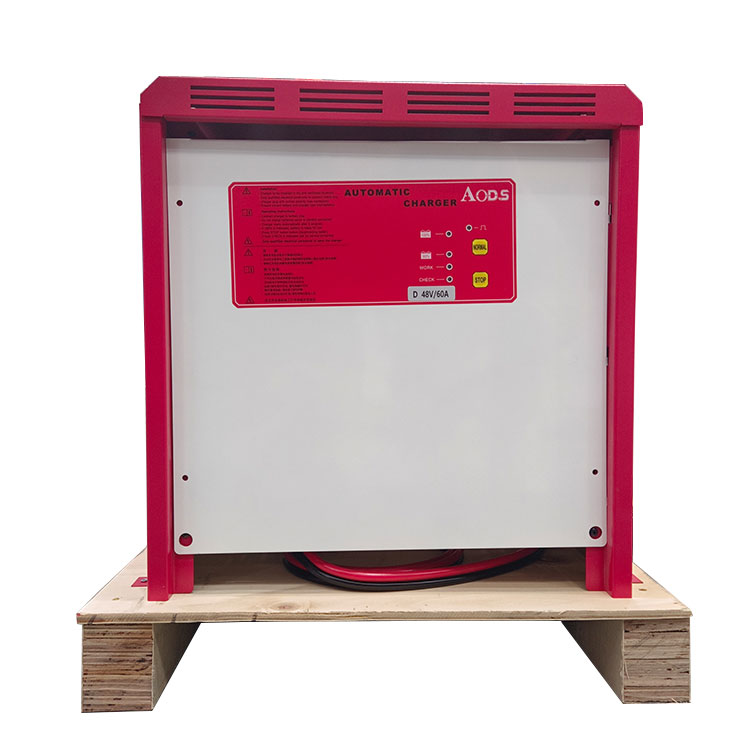
One example is the Forklift Battery Charger (48V 70A), which helps maintain the forklift's battery for optimal performance. These chargers are designed to be robust and ensure the forklift is ready for use, increasing its operational lifespan. While heavier forklifts tend to have a higher lifting capacity and more robust structures, they may be less maneuverable than lighter models. This can be a trade-off when choosing a forklift, as operations requiring tight maneuvering may benefit from lighter models, but those requiring higher lifting capacities would benefit from heavier ones.
The weight of a forklift also affects its transportation and storage. When forklifts are loaded onto trucks or trailers for movement, knowing their weight ensures the right transport equipment is used. It’s essential for operators to be aware of the forklift’s weight to avoid exceeding weight limits on floors, ramps, or transport vehicles. For example, heavy forklifts may require special loading equipment to prevent damage to surfaces or loading docks.
Heavy-duty diesel forklifts, such as those used in construction or outdoor operations, often weigh more than 15,000 lbs. These forklifts are specifically designed to handle large, heavy loads and operate in challenging environments where stability, strength, and durability are essential. They are commonly used in construction sites, shipping yards, and other heavy-duty industrial settings where substantial lifting is required. Their weight allows them to provide the necessary stability for carrying extremely heavy loads.
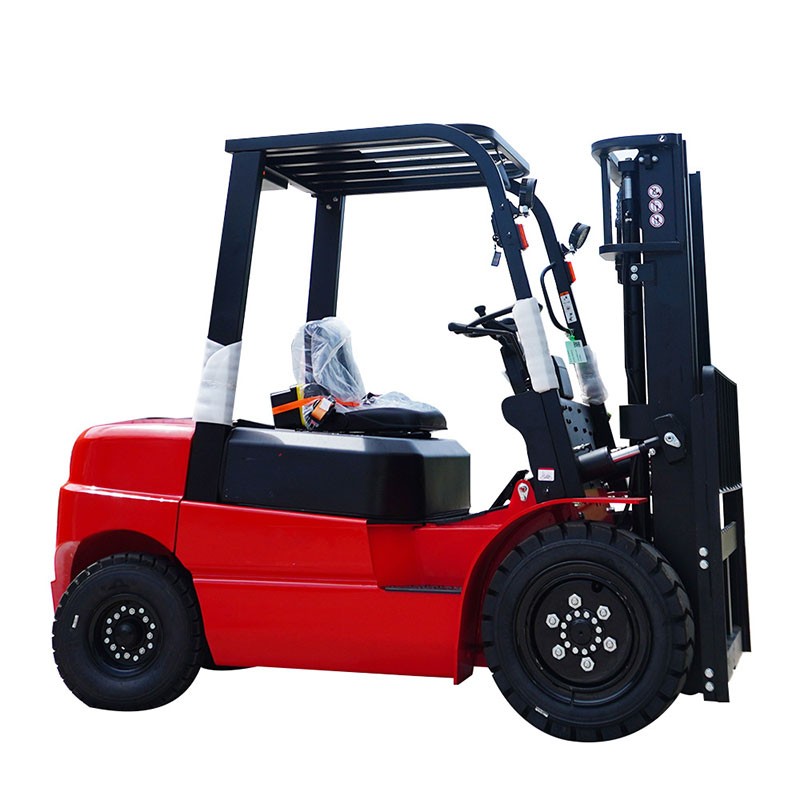
For example, the 3.5 Ton Multi-wheel Diesel Forklift is built to manage tough outdoor tasks like lifting materials in construction zones or transporting goods over rough terrain. These forklifts are much heavier due to their powerful diesel engines, reinforced structures, and larger tires designed to handle uneven surfaces. The added weight provides better stability, especially when lifting heavy loads that require additional counterbalance to prevent tipping.
While these heavy-duty forklifts are ideal for outdoor tasks and environments with rough terrain, they are unsuitable for confined indoor spaces. Their weight makes them difficult to maneuver in narrow aisles or areas with limited space. Heavy-duty forklifts excel in industries like construction, shipping, and manufacturing, where lifting heavy materials is a daily requirement. They offer a perfect solution for tough outdoor operations but come with the trade-off of being more challenging to transport and store.
Specialized forklifts, such as rough-terrain forklifts and telescopic forklifts, are designed for specific tasks and offer unique features to enhance their capabilities. These forklifts typically weigh between 10,000 and 50,000 lbs, depending on their lifting capacity and design. Their weight is a key factor in ensuring they can safely and efficiently handle their respective workloads in specialized environments.
Rough-terrain forklifts are ideal for construction sites, agricultural work, or any environment where the ground may be uneven, rocky, or unstable. These forklifts have large, durable tires and are designed to be more rugged than standard forklifts. Their weight provides the necessary stability for handling heavy loads on difficult terrain. Their increased weight, coupled with powerful engines and robust tire designs, makes them perfect for environments where other forklifts might struggle. These machines are designed to operate in outdoor environments where they may need to lift materials on uneven surfaces or over long distances.
Telescopic forklifts, often used in construction and agriculture, feature an extendable boom that allows them to lift materials to great heights. These forklifts are also referred to as telehandlers. Their heavier weight supports both their lifting capacity and their stability when reaching significant heights. The additional weight makes them capable of handling larger loads and provides a solid base to support the boom, ensuring safety when lifting at high elevations. Telescopic forklifts are essential for environments that require both vertical and horizontal lifting, such as when moving large materials or working in construction sites where height is a crucial factor.
These specialized forklifts are indispensable in certain industries, offering both the versatility to handle large, heavy loads and the strength to navigate challenging terrains. Their weight is integral to their performance, making them essential in industries where power, reach, and stability are paramount. However, the increased weight of these machines requires careful consideration when planning transportation and storage, as they often need specialized equipment and designated spaces to ensure safe handling and storage.
Forklift Type |
Weight Range |
Load Capacity Range |
Ideal Use Case |
Standard Electric Forklift |
8,000 - 9,000 lbs |
3,000 - 5,000 lbs |
Indoor environments, warehouse operations |
Heavy-Duty Diesel Forklift |
Above 15,000 lbs |
6,000 - 15,000 lbs |
Construction sites, outdoor heavy lifting |
Specialized Forklift (Rough Terrain) |
10,000 - 25,000 lbs |
5,000 - 10,000 lbs |
Outdoor rough-terrain tasks, construction |
Telescopic Forklift |
10,000 - 50,000 lbs |
6,000 - 20,000 lbs |
Construction, agriculture, high-lift tasks |
A forklift's self-weight is different from its load capacity. The self-weight refers to the weight of the forklift itself, including the frame, battery (if electric), and other integral components. The load capacity is the maximum weight that the forklift can safely lift and carry.
While heavier forklifts typically have higher load capacities, it’s important to note that a forklift's self-weight doesn't directly correlate with its lifting capacity. A forklift that weighs 8,000 lbs may be able to lift only 5,000 lbs, while a forklift weighing 15,000 lbs may lift 10,000 lbs or more. The weight ensures that the forklift can balance the load effectively, preventing tipping.
The stability of a forklift is heavily influenced by its weight. Heavier forklifts are more stable when lifting heavy loads, as their additional weight helps balance the load and prevent the forklift from tipping over. This is especially important when working at higher elevations or with uneven loads.
Forklifts with a lower self-weight may struggle with stability, especially when lifting loads near their maximum capacity. This can result in tipping hazards and accidents if not properly managed. Therefore, it’s essential to choose a forklift with the appropriate weight to match the tasks at hand, particularly in environments where heavy lifting and stability are critical.
When selecting a forklift, it’s crucial to consider both its weight and the specific tasks it will perform. Lighter forklifts are suitable for maneuvering in tight spaces, such as narrow aisles or small warehouses, while heavier forklifts are better for outdoor tasks and lifting heavy loads.
For example, a standard electric forklift weighing around 8,000 lbs might be ideal for indoor warehouse work, while a heavier, diesel-powered forklift would be more suitable for lifting construction materials outdoors.
The power source of a forklift plays a significant role in determining its weight. Electric forklifts are typically lighter because they rely on batteries, which are generally smaller and more compact than diesel engines. However, the batteries themselves can be quite heavy, especially for high-capacity models.
Diesel forklifts, on the other hand, tend to be much heavier due to the larger engines, fuel tanks, and reinforced frames. These forklifts are designed for outdoor use and heavy-duty lifting, and their additional weight helps improve stability.
LPG forklifts fall somewhere in between, offering a balance of power and weight. They are often used in both indoor and outdoor environments, providing versatility in operations.
Attachments such as side-shifters, rotators, and extendable forks can add significant weight to a forklift. For instance, the Forklift Battery Charger (48V 70A), which helps charge electric forklifts, adds extra weight. These attachments enhance the forklift’s versatility but must be considered when calculating the total weight of the machine.
The design and materials used in a forklift’s construction also affect its weight. Forklifts made from lightweight materials, such as aluminum, will typically weigh less than those made from steel. Additionally, the type of tires used, such as pneumatic or solid tires, can influence the overall weight of the forklift.
Heavier materials and more robust designs contribute to higher forklift weight but also provide greater stability and strength for lifting heavier loads.
The most reliable way to determine a forklift’s weight is by checking its data plate. The data plate will provide essential information, including the forklift’s self-weight, lifting capacity, and maximum height. This plate is typically located near the operator’s seat or on the frame of the forklift.
If the data plate is unavailable, you can estimate a forklift’s weight by multiplying its lifting capacity by a factor of 1.5 to 2. For example, if a forklift has a load capacity of 5,000 lbs, its weight would likely be between 7,500 and 10,000 lbs. This estimation provides a good starting point for understanding the forklift’s weight and operational requirements.
Forklift weight is critical for ensuring safety in operations. Overloading a forklift can lead to tipping, especially if the weight distribution is not balanced properly. Always check the forklift’s load capacity and ensure that the weight of the load does not exceed the recommended limits.
The balance between weight and maneuverability is key to operational efficiency. Lighter forklifts are easier to maneuver, especially in tight spaces, while heavier forklifts offer greater stability. Depending on the environment, you may need to choose a forklift that balances both aspects to ensure maximum efficiency.
Forklift weight also affects the ground load capacity, which refers to the amount of weight the floor can safely support. Before using a forklift in a warehouse or other facility, assess whether the floor can handle the machine’s weight without risking damage.
Different forklift brands, such as Toyota, Caterpillar, and Crown, offer forklifts with varying weights. For instance, Toyota electric forklifts are generally lighter, making them ideal for indoor use, while Caterpillar and Hyster offer heavier models designed for heavy-duty tasks.
When choosing a forklift, consider comparing different models based on their weight and lifting capacity. For example, a Toyota electric forklift with a weight of 8,000 lbs might be more suitable for light warehouse work, while a Hyster diesel forklift weighing 15,000 lbs would be better suited for outdoor tasks requiring heavy lifting.
Forklift weight plays a crucial role in its operation, safety, and efficiency. A forklift’s weight directly impacts its stability, lifting capacity, and suitability for various tasks. Choosing the right forklift weight is essential for optimizing performance and ensuring safety in different environments. Understanding these factors will help you make informed decisions when selecting the best forklift for your needs.
A: The average weight of a forklift ranges from 8,000 to 9,000 lbs for standard electric models, while heavier diesel forklifts can weigh over 15,000 lbs.
A: Forklift weight is crucial for stability, load capacity, and safe operation. Heavier forklifts provide better balance, especially when lifting heavy loads.
A: To estimate forklift weight, multiply its load capacity by 1.5 to 2. For example, a 5,000 lbs forklift would weigh between 7,500 and 10,000 lbs.
A: Yes, the weight of a forklift influences its load capacity. Heavier forklifts generally have higher load capacities and offer better stability for lifting.
A: Electric forklifts are typically lighter due to smaller engines, while diesel forklifts are heavier due to their larger engines and fuel tanks.
A: Forklift weight affects maneuverability and stability. Lighter forklifts are easier to maneuver in tight spaces, while heavier ones provide better stability for heavy-duty tasks.


