1. Introduction
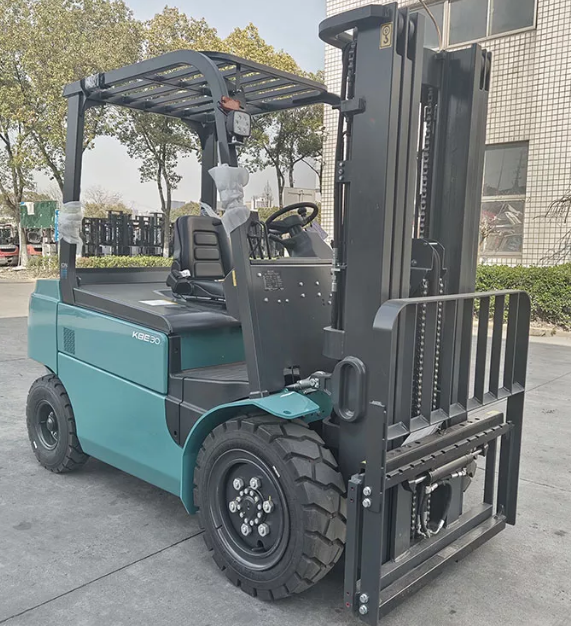
Forklifts are essential in many industries, especially in warehouses. Understanding their parts is crucial for safe and efficient operation. In this article, we’ll explore the main forklift components and their functions. By the end, you’ll understand how each part contributes to the overall performance of the forklift.

2. The Chassis and Its Components
2.1 Overview of the Chassis
The chassis is the structural foundation of a forklift. It serves as the frame that supports every other major component, including the engine, wheels, counterweight, and operator compartment. The design of the chassis is critical to the forklift’s performance, as it ensures the machine can carry heavy loads safely and efficiently.
The chassis is designed to evenly distribute the weight of the forklift and its load, which is essential for stability. When the forklift lifts a heavy load, the chassis provides a stable base to keep the machine balanced, preventing tipping. This balance is crucial, especially in environments where forklifts are used to move large and heavy items. A well-designed chassis ensures smooth and stable operation, even under the most challenging conditions.
By providing a solid foundation, the chassis supports the forklift’s functionality. Without a sturdy chassis, the machine would not be able to perform effectively or safely. This is why the design and integrity of the chassis are crucial for forklift safety and longevity.
2.2 Counterweight
Function: The counterweight of a forklift is mounted at the rear of the machine to counterbalance the load at the front. This component is crucial for maintaining the stability of the forklift, especially when it is lifting heavy items. Without the counterweight, the forklift would tip forward when lifting, creating a significant risk of accidents and damage. The counterweight ensures that the forklift’s weight is properly distributed, making the forklift stable and safe to operate.
Types of Counterweights:
Type | Description |
Bulk-type | Typically lead-filled, hollow or solid, and used for general counterbalance. |
Stack-type | Removable metal plates stacked to increase or decrease lifting capacity, commonly used for high-capacity forklifts. |
Importance: The design of the counterweight plays a critical role in ensuring the forklift’s stability. A forklift with an improper or insufficient counterweight will have poor weight distribution, leading to instability and increased risk of tipping. Whether using bulk-type or stack-type counterweights, proper attention to weight distribution is vital for both the forklift’s performance and safety.
A forklift without a proper counterweight can easily lose stability, particularly when lifting loads near the maximum weight capacity. Ensuring the correct counterweight design for each application helps improve the forklift's overall functionality.
2.3 Engine/Battery Compartment
Function: The engine or battery compartment houses the power source that drives the forklift. In internal combustion (IC) forklifts, this compartment typically contains an engine powered by propane, gasoline, or diesel. For electric forklifts, the compartment contains large batteries that need to be regularly charged to ensure continuous operation.
Internal Combustion Forklifts: For indoor and outdoor environments requiring high lifting capacities, internal combustion forklifts are ideal. These machines are powered by fuel, such as propane or diesel, and are well-suited for tasks requiring power and endurance. However, they tend to be louder and emit exhaust gases, which makes them less suitable for indoor use where air quality and noise reduction are essential.
Electric Forklifts: Electric forklifts, on the other hand, use rechargeable batteries as their power source. These forklifts are quieter and produce no harmful emissions, making them more suitable for indoor operations, such as in warehouses and factories. Their clean operation and quieter nature are major advantages when working in enclosed spaces where air quality is a concern.
Battery Management: For electric forklifts, proper battery maintenance is crucial. Ensuring that the batteries are charged and well-maintained is essential for maintaining the efficiency and longevity of the forklift. Regular battery checks, including fluid levels and charging cycles, help avoid unexpected downtime and costly repairs.
2.4 Operator Compartment
Function: The operator compartment is where the forklift driver sits or stands. This compartment contains essential controls like the steering wheel, pedals, and levers that allow the operator to maneuver the forklift and lift or lower loads. The operator compartment is designed with ergonomics in mind, ensuring that the operator can access all controls comfortably and safely.
Key Safety Features in the Operator Compartment:
Feature | Function |
Seatbelt | Secures the operator to prevent injury during a tip-over. |
Emergency stop | Allows the operator to stop the forklift immediately in emergencies. |
Gauges | Monitor performance indicators like engine temperature and fuel levels. |
Ergonomics and Comfort: A well-designed operator compartment enhances the operator’s comfort, reduces fatigue, and improves operational efficiency. It allows the operator to have full control over the forklift’s movement, even during long hours of operation. For safety and comfort, modern forklift models are designed with adjustable seats, easy-to-use controls, and clear visibility of the work area.
Safety Features: Besides the essential controls, safety features like seatbelts, emergency stop buttons, and easily visible gauges are critical to the operator’s safety. The seatbelt prevents injury during a forklift tip-over, while the emergency stop feature allows the operator to quickly stop the forklift in dangerous situations. Gauges help monitor key aspects of the forklift’s operation, including the fuel level and engine temperature.
2.5 Wheels and Tires
Function: The wheels and tires of a forklift are responsible for allowing the machine to move and bear heavy loads. Forklift tires are specifically designed to handle the stresses and wear of industrial environments. These tires are built for stability, durability, and traction, ensuring smooth movement on various surfaces, whether indoors on smooth concrete floors or outdoors on uneven, rough terrains.

Types of Forklift Tires:
Tire Type | Characteristics | Ideal Use |
Pneumatic tires | Air-filled, provide excellent traction on uneven surfaces. | Outdoor environments, rough terrains. |
Solid pneumatic tires | Filled with foam, more durable than air-filled tires. | Environments with debris, like scrap yards. |
Cushion tires | Made of solid rubber, ideal for smooth, indoor surfaces. | Indoor environments with smooth surfaces. |
Pneumatic Tires: Pneumatic tires, filled with air, offer excellent traction and are ideal for uneven surfaces, making them the best choice for outdoor use. They are typically used in construction sites, outdoor warehouses, and other environments with rough terrain.
Solid Pneumatic Tires: These tires are filled with foam instead of air. They are more durable than air-filled tires and are often used in environments where punctures or damage from debris are a concern, such as in scrapyards and construction sites.
Cushion Tires: Cushion tires are made of solid rubber and are designed for smooth indoor surfaces. They offer excellent maneuverability and are commonly used in warehouses or factories with concrete floors. Cushion tires are ideal for applications that require precise control in tight spaces.
Tire Maintenance: Regular inspection and maintenance of forklift tires are necessary to ensure optimal performance. Tires should be checked for wear, damage, and proper inflation levels to prevent accidents and ensure smooth operation.
3. The Mast and Its Functions
3.1 Overview of the Mast
The mast is the vertical component of a forklift that allows it to lift, lower, and tilt loads. It consists of interlocking rails and hydraulic systems that enable precise control of the load. The mast’s height determines the maximum lift height of the forklift, which is crucial for stacking and moving items at varying heights. The mast plays a key role in the forklift’s ability to handle both heavy and tall loads.
3.2 Types of Forklift Masts
Forklifts come with different types of masts to accommodate various lifting needs. The choice of mast depends on the job requirements, including the maximum height of the loads being handled.
● Single-stage mast (Simplex): Has one channel, providing limited lift height. Ideal for environments with no overhead clearance concerns.
● Two-stage mast (Duplex): Offers more lifting capacity and is used for stacking pallets or unloading trucks.
● Three-stage mast (Triplex): The most versatile, with three channels for lifting at greater heights.
● Quad mast: The highest lifting capacity, used for specialized warehouse applications requiring extensive vertical reach.
3.3 Main Components of the Mast
The mast is made up of several key parts:
● Rails: These are the frame that supports the mast’s lifting mechanism.
● Hydraulic cylinders: These cylinders provide the force to lift and tilt the mast and forks.
○ Lift cylinders raise and lower the forks.
○ Tilt cylinders adjust the mast’s forward and backward tilt.
● Carriage: The platform that holds the forks or other attachments, moving vertically to adjust load height.
Carriage and Lift Mechanism:
Component | Function |
Carriage | Moves vertically to lift or lower loads, supports the forks. |
Lift Cylinders | Raise and lower the forks based on hydraulic pressure. |
Tilt Cylinders | Allow the mast to tilt forward or backward for load stability. |
The mast components work together to allow the forklift to raise, lower, and stabilize loads, ensuring smooth handling of materials in various environments.
4. Forks and Attachments
4.1 Fork Types and Their Functions
Forks are the primary lifting tools of a forklift. They are designed to slide under pallets or loads to lift and transport them. Forks come in various lengths and sizes to accommodate different types of loads.
Common fork sizes:
Size | Use Cases |
42" | Standard load handling, often used for pallets. |
48" | Common in warehouses for medium-sized loads. |
60" and 72" | Used for larger or specialized loads. |
The correct fork size is crucial for ensuring stability when lifting and transporting loads. Forks that are too long or too short for a load can lead to instability and unsafe handling.
4.2 Common Forklift Attachments
Forklift attachments expand the forklift's capabilities, allowing it to handle a wide range of tasks.
4.2.1 Sideshifters
Function: Sideshifters enable the forklift operator to move the load sideways without moving the entire forklift. This is particularly useful in tight spaces or when adjusting the alignment of a load.
4.2.2 Fork Positioners
Function: Fork positioners allow operators to adjust the fork width hydraulically. This makes it easier to handle pallets of varying sizes without manually adjusting the forks. Fork positioners improve the efficiency and versatility of forklifts, especially in environments where load sizes frequently change.
5. Forklift Safety Features
5.1 Overhead Guard
Function: The overhead guard is a safety feature that protects the operator from falling objects. It’s an essential part of forklift safety, particularly in environments where materials or goods are stored at heights. The overhead guard prevents injuries from falling debris, making it a crucial feature in any warehouse or industrial setting.
5.2 Seat Belts and Seats
Importance: Seat belts are critical for preventing injuries during forklift tip-overs. A secure seatbelt ensures that the operator stays inside the cabin, reducing the risk of being ejected during a sudden shift in weight or a tip-over. Many forklifts are now equipped with advanced seatbelt systems that improve safety.
5.3 Warning Lights and Reversing Alarms
Role: Warning lights and alarms are vital safety features that enhance visibility in busy environments. Reversing alarms alert pedestrians when the forklift is moving in reverse, while strobe lights make the forklift more visible to others in low-light conditions or high-traffic areas. These safety features are essential for preventing accidents in environments where visibility may be limited.
6. Hydraulic System and Drive Mechanism
6.1 Hydraulic System
The hydraulic system is responsible for lifting and lowering the forks. It uses hydraulic fluid, cylinders, and pistons to create the pressure needed for vertical movements. This system allows the forklift to operate efficiently, lifting heavy loads with minimal effort.
Hydraulic System Components:
Component | Function |
Lift Cylinders | Raise and lower the forks based on hydraulic pressure. |
Tilt Cylinders | Allow the mast to tilt forward or backward for load stability. |
Hydraulic Fluid | Transmits power to cylinders for lifting and tilting. |
6.2 Drive Mechanism
Forklifts can be powered by internal combustion engines (propane, diesel, or gasoline) or electric batteries. The drive mechanism uses the power from the engine or battery to turn the wheels and move the forklift.
Differences between IC and electric forklifts:
Feature | Internal Combustion Forklifts | Electric Forklifts |
Power Source | Gasoline, diesel, or propane | Electric battery |
Noise | Noisy, emits exhaust gases | Quieter, no emissions |
Ideal Usage | Outdoor use, heavy lifting | Indoor use, light to medium lifting |
7. Forklift Operation and Maintenance Tips
7.1 Pre-Operation Inspections
Before using a forklift, operators should conduct a pre-operation inspection to ensure everything is in working order. This includes checking fluid levels (oil, hydraulic fluid), brakes, and the overall condition of the forklift.
Pre-operation inspection checklist:
Component | Inspection Task |
Hydraulic fluid | Check the fluid levels for proper operation. |
Oil levels | Ensure the engine oil is at the right level. |
Brakes | Test the brakes for responsiveness and function. |
Tires | Inspect for wear and ensure proper inflation. |
7.2 Regular Maintenance
Regular maintenance is essential for keeping the forklift in good condition. This includes checking the engine or battery, lubricating moving parts, and ensuring that all safety features are functional.
Conclusion
Understanding the parts of a forklift is essential for safety and efficiency. Each component, from the chassis to the mast, plays a critical role in its operation. Proper knowledge ensures safe handling and extends the forklift's lifespan. Regular maintenance is key to preventing issues and improving performance.
FAQ
Q: What are the main parts of a forklift?
A: The main parts of a forklift include the chassis, mast, counterweight, operator compartment, and wheels. Each part plays a critical role in the forklift's overall performance and safety.
Q: Why is understanding forklift parts important?
A: Understanding forklift parts is essential for safety, efficient operation, and maintenance. Proper knowledge helps prevent accidents and ensures the forklift operates at its best.
Q: How does the mast function on a forklift?
A: The mast of a forklift allows for lifting, tilting, and lowering loads. It works with hydraulic systems to provide precise control of the load’s height and stability.
Q: What is the role of the forklift counterweight?
A: The counterweight of a forklift is located at the rear and balances the load at the front. It prevents the forklift from tipping over when lifting heavy items.
Q: How can I maintain my forklift’s hydraulic system?
A: Regularly check hydraulic fluid levels and ensure there are no leaks. Maintaining the hydraulic system ensures smooth lifting and tilting operations.